
Introduction
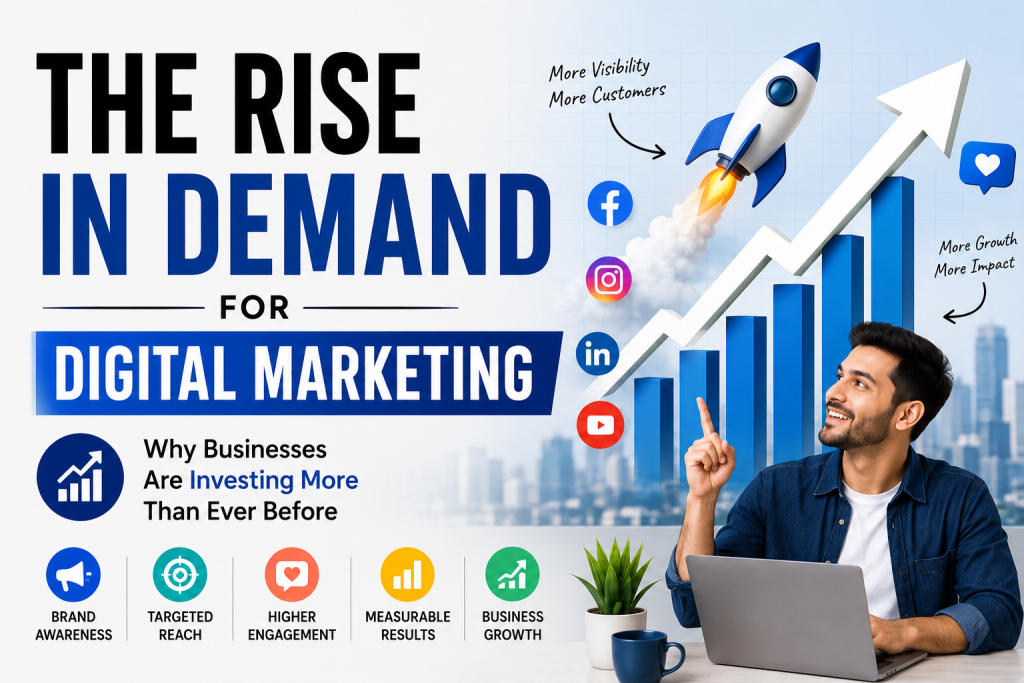
The rising demand for digital marketing has reached unprecedented levels as businesses scramble to reach customers online. This guide is for business owners, marketing professionals, and entrepreneurs who want to understand why digital marketing has become essential for growth and survival.
Digital marketing spend is expected to hit $786 billion globally by 2026, driven by changing consumer behaviour and technological advances. Companies that ignore this shift risk losing market share to competitors who embrace digital strategies.
Market Forces Rising demand for Digital Marketing Growth
Consumer Shift to Online Shopping and Digital Experiences
The pandemic accelerated what was already happening – people moving their lives online. Shopping habits changed dramatically as consumers discovered the convenience of browsing, comparing prices, and purchasing products from their homes. What started as necessity during lockdowns has become the new normal for millions of people worldwide.
E-commerce sales have skyrocketed, with platforms like Amazon, Shopify, and countless direct-to-consumer brands capturing market share from traditional retail stores. Consumers now expect seamless digital experiences, from product discovery through social media to one-click purchasing and instant customer support via chatbots.
Mobile Device Adoption and Social Media Engagement
Smartphones have become the primary gateway to the internet for billions of people. Mobile commerce accounts for over half of all online sales, and this percentage continues growing year after year. People check their phones over 150 times daily, creating countless micro-moments where brands can connect with potential customers.
Social media platforms have evolved into sophisticated marketing ecosystems. Instagram Shopping lets users purchase directly from posts, TikTok’s algorithm can make unknown brands go viral overnight, and LinkedIn has become a powerful B2B marketing channel. These platforms offer unprecedented targeting capabilities, allowing businesses to reach specific demographics, interests, and behaviours with laser precision.
The rise of social e-commerce – buying directly through social media platforms – has created new revenue streams for businesses. Influencer marketing has become a multi-billion dollar industry, with micro-influencers often delivering better engagement rates than celebrity endorsements.
Cost-Effectiveness Compared to Traditional Advertising Methods
Traditional advertising methods like television commercials, print ads, and billboards require massive upfront investments with limited targeting options. A single TV ad during prime time can cost hundreds of thousands of dollars, and there’s no guarantee it reaches your ideal customers.
Digital marketing flips this model completely. Small businesses can start Google Ads campaigns with just $50 and immediately reach people actively searching for their products or services. Facebook and Instagram ads allow precise targeting based on age, location, interests, and even recent online behaviour, ensuring marketing budgets reach the most relevant audiences.
Email marketing delivers an average return of $42 for every dollar spent. Content marketing costs 62% less than traditional marketing while generating three times more leads. These numbers explain why businesses are rapidly shifting their marketing budgets from traditional channels to digital platforms.
Business Benefits of Digital Marketing Investment
Enhanced Brand Visibility and Global Reach
Digital marketing transforms how businesses connect with their audiences, breaking down geographical barriers that once limited growth potential. Companies can now showcase their products and services to customers worldwide through social media platforms, search engines, and digital advertising networks. This expanded reach means a local bakery in Denver can sell specialty items to customers in Tokyo, while a software start up can attract clients from multiple continents simultaneously.
Search engine optimization (SEO) plays a crucial role in boosting brand visibility online. When businesses optimize their websites and content for relevant keywords, they appear higher in search results, making it easier for potential customers to discover them. This organic visibility builds credibility and trust, as consumers often perceive top-ranking websites as industry leaders.
Targeted Audience Segmentation and Personalized Messaging
Digital marketing excels at precise audience targeting, allowing businesses to deliver the right message to the right people at the right time. Advanced analytics tools help marketers identify specific demographics, interests, behaviors, and purchasing patterns, creating detailed customer profiles that guide campaign strategies.
Email marketing platforms enable businesses to segment their subscriber lists based on multiple criteria such as age, location, purchase history, and engagement levels. This segmentation allows for highly personalized messaging that resonates with each group’s unique needs and preferences. A fitness brand might send strength training tips to gym enthusiasts while sharing yoga content with wellness-focused subscribers.
Social media advertising platforms offer sophisticated targeting options that were unimaginable with traditional marketing methods. Businesses can reach users based on their job titles, relationship status, recent life events, or even specific interests like “recently moved” or “interested in sustainable fashion.” This precision reduces wasted ad spend while increasing conversion rates significantly.
Conclusion
The rising demand for digital marketing occurred because businesses need to reach customers where they spend most of their time – online. Companies are pouring money into digital strategies because they deliver better ROI, precise targeting, and real-time results compared to traditional marketing. From social media and search engine optimization to email campaigns and content marketing, these channels have become essential tools for businesses of all sizes to stay competitive and grow their customer base.
The demand for skilled digital marketers will only continue climbing as new technologies like AI, voice search, and personalized automation reshape how brands connect with audiences. If you’re considering a career in digital marketing or looking to expand your business’s online presence, now is the perfect time to dive in. Start by focusing on one or two key channels, learn the fundamentals, and stay curious about emerging trends – the digital marketing world rewards those who adapt quickly and think creatively about solving customer problems.